Ras el Hanout Couscous: carbs, calories and nutrition values
Ras el Hanout Couscous: approximately 20.4 g carbohydrates and 125 kcal per 100 g using an indicative recipe estimate.
Estimate a real couscous meal with Glu-Scan
Take a photo or describe your couscous plate to estimate carbohydrates, calories, protein and fat.
- AI meal scan
- Carbohydrate estimation
- Calories, protein and fat
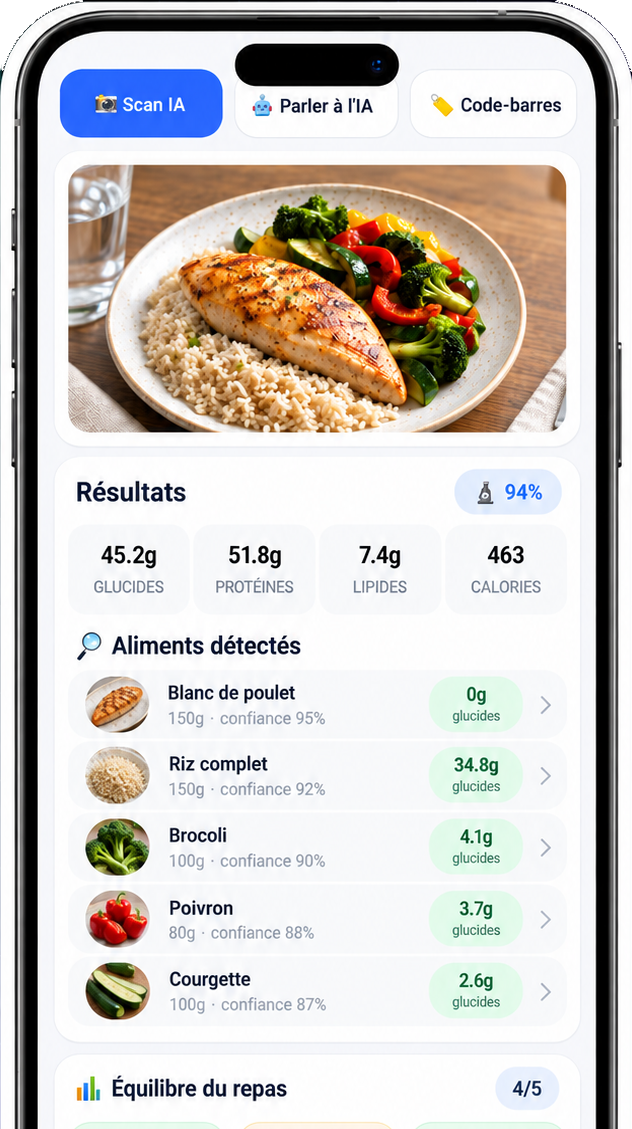 AI meal scan
Portion calculator
Enter the weight of your serving to estimate carbohydrates, calories, protein and fat.
Understanding the nutrition values
The values above are indicative estimates for Ras el Hanout Couscous. Traditional and modern couscous recipes can differ significantly depending on the grain-to-sauce ratio, meat, vegetables, oil, nuts and dried fruit.
| Amount | Carbohydrates | Calories | Protein | Fat |
|---|---|---|---|---|
| 100 g | 20.4 g | 125 kcal | 4.2 g | 3 g |
| 200 g | 40.8 g | 250 kcal | 8.4 g | 6.0 g |
| 300 g | 61.2 g | 375 kcal | 12.6 g | 9.0 g |
Related couscous nutrition pages
Explore more couscous dishes in the English Glu-Scan nutrition database.
Frequently asked questions
How many carbohydrates are in Ras el Hanout Couscous?
This page uses an indicative estimate of about 20.4 g carbohydrates per 100 g. The actual result depends on the recipe and portion.
How many calories are in Ras el Hanout Couscous?
This page uses an indicative estimate of about 125 kcal per 100 g. Oil, meat, nuts and dried fruit can increase the calorie content.
Does couscous nutrition vary between Moroccan, Algerian and Tunisian recipes?
Yes. The grain, broth, vegetables, meat, fish, spices and serving proportions can differ considerably between recipes and regions.